Blog
Large Format Printer for Small Business: A Practical Buying Guide

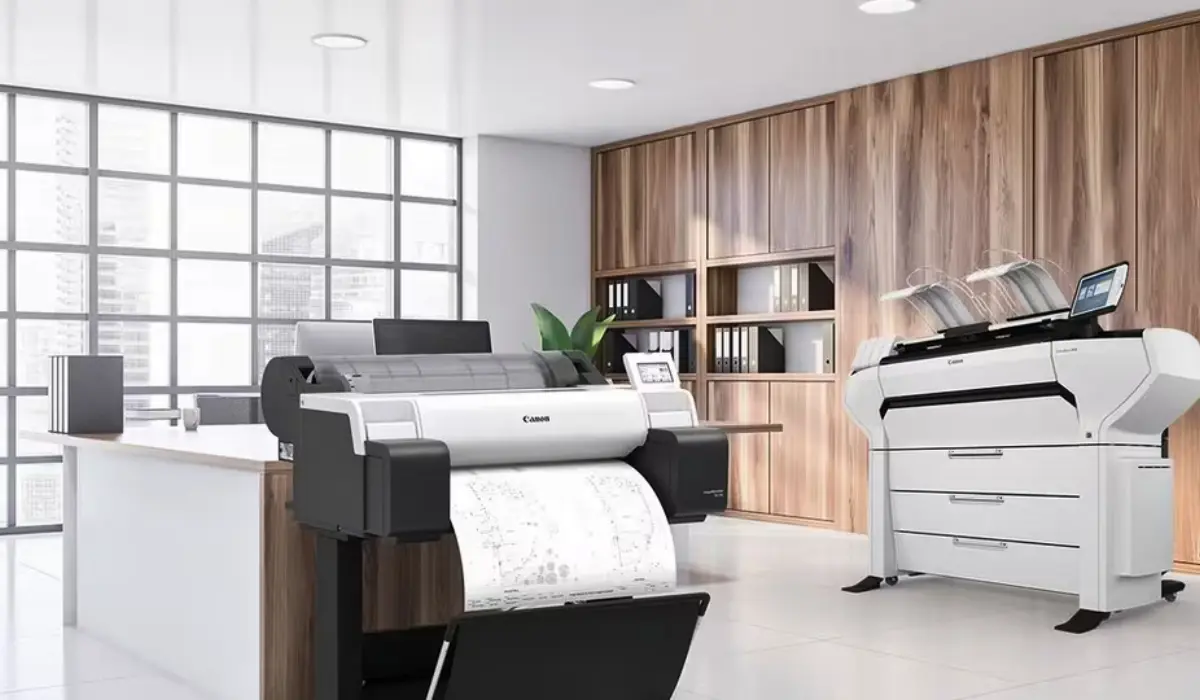
A lot of small business owners have trouble balancing quality, costs, and efficiency at every step of the production process. This is especially true when making signs, posters, banners, CAD drawings, marketing graphics, or signs for stores or other places. Buying the best large format printer for small business will have an impact on both how productive you are and how customers see your brand. Many small business owners don’t want to invest in large-format printing because they think it will be too hard or too expensive to run. But the truth is that many printing options have become much smaller, cheaper, and easier to use in the last few years.
A small business owner can save a lot of money by printing in-house instead of hiring outside vendors and has more control over how quickly the work gets done than if they had sent it out. This guide will help you understand what makes a large-format printer good for small businesses, what features to look for, what kinds of things people usually send to be printed, and how to pick a model that prints professionally without costing you a lot of money or taking up too much space.
What Is a Large Format Printer and Why Small Businesses Need One
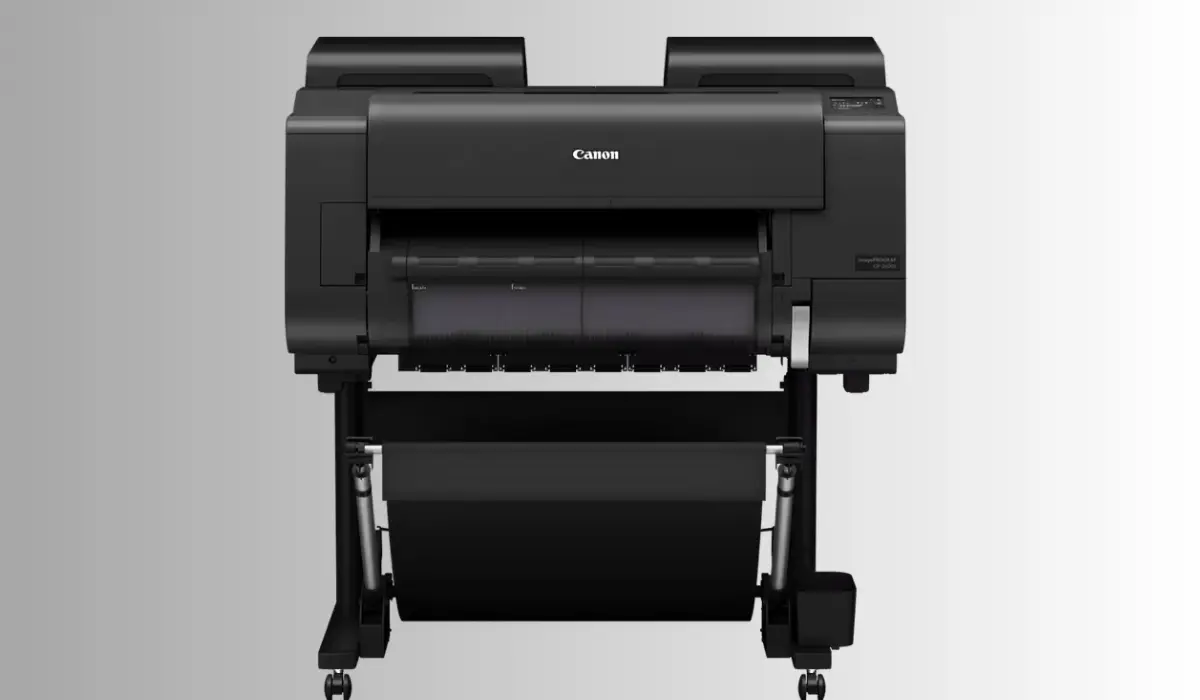
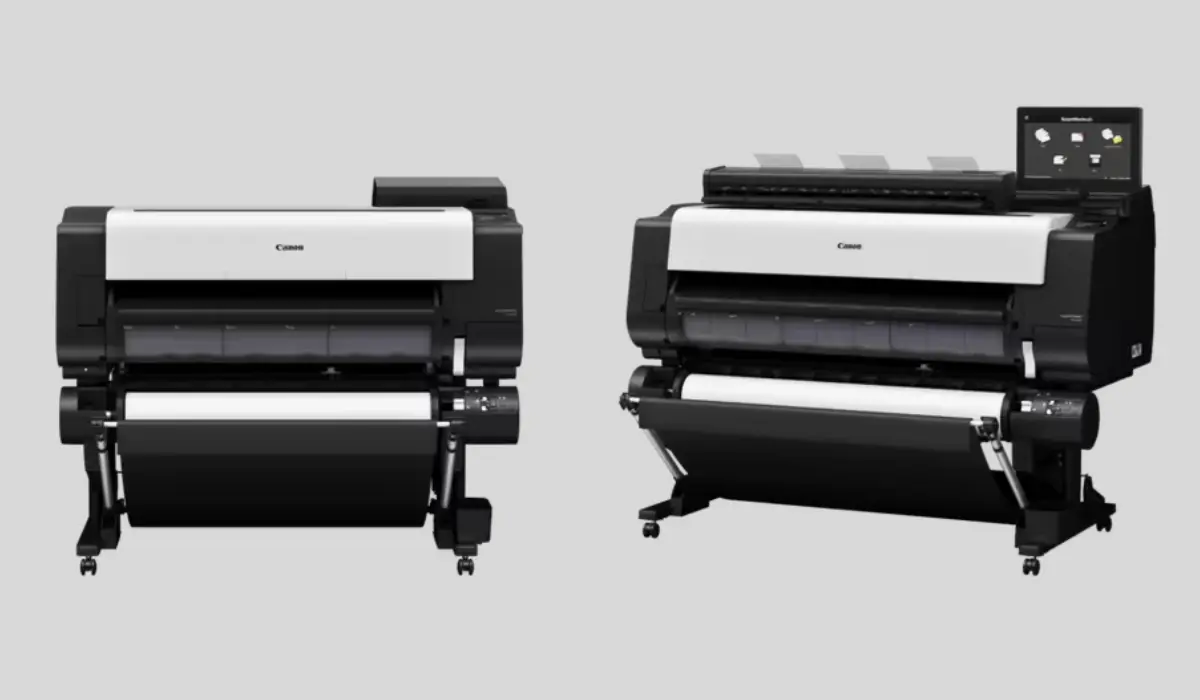
Larger-format printer has been created for printing wider paper than normal office printers (24″ to 60″). This type of printer is commonly used to print posters, banners, blueprints, murals, displays at exhibitions, and marketing collateral for small companies. Having access to these larger printers provides small businesses with the benefits of quicker production time, maintaining consistent quality throughout the production process, and more options when designing.
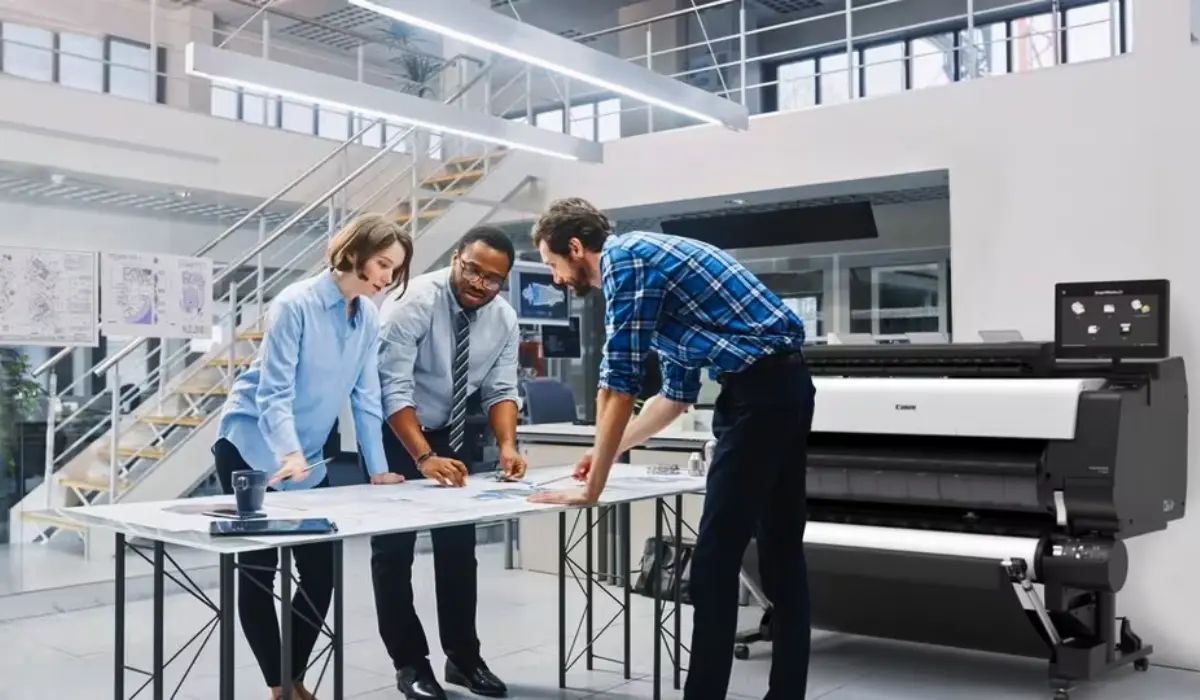
Rather than going through a third-party printing company to produce their printed materials, the small business owner can create and customize their designs, print immediately, and produce the necessary prints within a tight deadline. Marketing agencies, retail stores, architectural firms, education institutions, and printing service companies with a desire to grow their business gradually may find this type of large-format printer to be very advantageous, due to lower initial costs.
Key Features to Look for in a Large Format Printer
The right printer is paramount for a small company’s success. The best way to pick a printer is to look at what is important to your company.
Print Quality and Resolution
A high-quality print resolution is essential for your documents to have a sharp, clear look and for gradients to flow smoothly and colour to be correct. You want to choose a printer that has the highest-quality print resolutions and the most advanced ink technology, so your prints will be reliable and high quality.
Media Compatibility
A large-format printer should be able to accommodate different kinds of media; it can be used for photo paper, canvas, vinyl, plain paper, and coated media. The flexibility of the large-format printer will enable you to provide more services to your customers without having to invest in additional printers.
Speed and Productivity
A small company may not require an industrial level of speed, but for quality and reliability, a printer that produces an adequate output speed while maintaining its quality is most beneficial to your company. The best printers accomplish this task of providing a fast output speed while ensuring the print quality is acceptable and on time.
Size and Footprint
Small office or studio space is usually limited, and therefore, printers that are compact and have front-loading paper paths and require minimal maintenance could be more easily integrated into smaller workspaces.
Operating Costs
The long-term costs of a printer’s ink efficiency, cartridge size, and maintenance requirements have a significant impact on the cost of ownership. Selecting a printer that utilizes economical use of ink will save money over time.
Common Use Cases for Small Businesses
There are numerous applications of large-format printers that aid businesses in increasing their sales.
Retail and Hospitality
Retailers are utilizing large format prints for signs, displays, and promotional materials, while restaurants and cafes are printing their menus, graphics for walls, and special offers.
Design and Architecture Firms
Architects, engineers, and designers rely on large-format printers for CAD drawings, floor plans, technical illustrations, and presentation visuals. Precision and line accuracy are especially important in these fields.
Marketing and Advertising
Marketing agencies and individuals in the creative field are using large-format printing to produce everything from banners to event graphics to marketing collateral as quickly as possible. Quickly printing items allows them to meet client demands without having to outsource.
Education and Training Centers
Schools, training centers, and businesses all use large format prints for charts, teaching aids, safety signs, and internal communications displays.
Ink Technologies Explained
By learning about ink technology, you will better select a printer to produce your desired prints.
Pigment Ink
Pigment inks can provide durable, water-resistant, and fade-resistant ink, so they make great posters, technical drawings, and signage for places where they will be exposed to the elements.
Dye Ink
Dye inks give bright colors and smooth tones, so they’re ideal for photo printing and indoor displays. For this reason, companies use dye inks for marketing purposes and visual presentations.
In recent years, many new printers use a combination of both types of inks to give users maximum color vibrancy and durability.
How to Choose the Best Option for Your Business
To select the best large-format printer for your small business, you need to know exactly what you want to achieve. First, identify what type of products you will produce the most, whether that be posters, drawings, or banners. Determine how many times a month you expect to print and how soon after you will need the product returned to you.
Secondly, your budget should be inclusive of not just the purchase price of the printer but the ink cost, media costs, and maintenance costs that will be associated with the printer. Reliability and local service support are also extremely important because any downtime will halt your business operations. Lastly, find a printer that has user-friendly software, is easy to set up, and has simple maintenance procedures so your employees will be more productive and less concerned about technical support.
Maintenance and Ease of Use
Modern large-format printers have been built to be user-friendly. Most of the time, users do not have to manually adjust their settings; instead, these printers perform automatic nozzle checks, ink cartridges are easy to swap, and they are equipped with touch screens that guide users through the process. As a result, most users will require very little maintenance on their printers, and the majority of large-format printers can run continuously even in busy work environments. Because of their ease of use, they are ideal for small businesses that do not have dedicated technical staff members.
Long-Term Value and Business Growth
When purchasing a large-format printing machine, businesses should consider not only the immediate need for printed products but also what they will gain in the future. If your business grows and expands, printing good-quality products in-house will allow you to develop new ways to generate income, eliminate dependence on outside vendors, and increase the speed at which you receive finished products. Moreover, having the ability to experiment with new products, materials, and designs allows your business to remain competitive and adaptable to changing market conditions.
Conclusion: Making the Right Choice for Your Business
The success of choosing the correct large format printer for small business relies on assessing your goals with the printer and how its technology will meet those goals, while also considering how it fits into your business’s available space and budget. By selecting a large-format printer that meets your requirements, your company will have a printing tool that not only produces high-quality professional prints but also has the potential to enhance your overall operational efficiencies and brand by reducing the amount of added complexity for you and your team.
When considering factors such as print quality, media options, overall operating costs, and ease of use, a small business can confidently choose a large-format printing solution that will provide long-term value. When this approach is used to select the right large-format printer, it turns into a valuable tool for enhancing a small business’s creativity, growth, and ultimately its customer satisfaction when creating custom printed items.